
Header Skipped.
Spinal Cord Injury Rehabilitation
If you’re searching for a spinal cord injury treatment center that you can trust, contact the spinal cord injury experts at Spaulding Rehabilitation.
When potentially life-altering spinal cord injury (SCI) occurs, you need the best spinal cord injury rehab available to you. Spaulding's Spinal Cord Injury Rehabilitation centers offer coordinated, compassionate care and the support of clinicians dedicated to pioneering improved spinal cord therapies that make all the difference to your immediate and long-term recovery. Within our Rehabilitation Network, supporting your return to an active, productive and fulfilling life is the goal behind everything we do.
Types of Spinal Cord Injuries
It is estimated that roughly 12,500 spinal cord injuries occur in the U.S. each year. Spinal cord injuries fall into two main categories: complete & incomplete injuries. The type of injury is typically defined by where the injury occurs along the spinal cord and the severity of the injury.
Complete spinal cord injuries involve the most serious cases where the spinal cord is injured to the point where communication to the brain is essentially eliminated, often leading to paralysis.
Incomplete spinal cord injuries are the most common spinal cord injuries, accounting for nearly 60% of all SCIs. The most common types of incomplete SCIs include:
- Anterior Cord Syndrome - When the front of the spinal cord is damaged. Can often interfere with sensations of touch, pain, and temperature.
- Central Cord Syndrome - When the SCI occurs at the center of the cord. Damages to the nerves carry signals from the brain to the spinal cord, which may result in loss of fine motor skills, paralysis of the arms, and partial impairment—usually less pronounced—in the legs are common.
- Brown-Sequard syndrome - When the SCI results in damage to one side of the spinal cord. Typically, the injury is more pronounced on one side of the body which may make movement nonviable on one side, but may have full retention on movement on the other side.
Spaulding’s Spinal Cord Injury Rehabilitation Centers have been designed to handle the full spectrum of both complete and incomplete SCIs and patients are assigned to the appropriate facility depending on the severity of their injury.
With the guidance of our physicians and other rehabilitation specialists and with access to some of the most advanced technologies available today, you will have the resources to reach your highest level of spinal cord injury recovery – and find successful, enriching ways to live independently.
Levels of Care for Spinal Cord Injury Rehabilitation
Along the way, your recovery is supported by some the most advanced rehabilitation treatments, research and programs available that create a continuum of care.
-
Hospital Rehab
-
Long-Term Acute
-
Outpatient
-
Skilled Nursing

Spaulding's Approach to Spinal Cord Injury Rehabilitation
Hospital Rehab Spinal Cord Injury Program
Spaulding Rehabilitation Hospital Boston
Spaulding Rehabilitation Hospital Cape Cod
Our inpatient rehabilitation hospital teams create an individualized rehabilitation plan to address the medical, physical, and psychological effects associated with your spinal cord injury.
As part of your rehabilitation, you will have access to:
- Rehabilitation physician-led teams, which include physical, occupational, speech, and recreational therapists, music therapists, case managers, social workers, mental health and internal medicine specialists, nurses with specialized training in spinal cord rehabilitation, registered dieticians and respiratory therapists. The team will also work with community organizations to help identify opportunities to improve a transition to the community.
- Training to teach family members how to assist with specific therapeutic activities during hospital treatment and after you transition to the community
- Proven therapeutic interventions, depending on the severity of your injury, including balance and mobility training; speech, swallowing and breathing strategies; cognitive retraining and strategies, behavior and safety techniques; dressing, bathing and other activities of daily living; and bowel and bladder management. State of the art technology is incorporated into individual treatment sessions to help achieve established goals.
- Individual peer counseling and participation in community support groups
Long-term Acute Care
Spaulding Hospital for Continuing Medical Care Cambridge
Long-term Acute Care Hospitals (LTAC) are for people whose spinal cord injury is severe or combined with other serious medical problems. Oftentimes, patients in need of LTAC-level care have complex medical and rehabilitation needs and are transferred directly from an acute hospital intensive-care unit (ICU) to one of our facilities.
As part of our LTAC programs, patients receive:
- More intensive medical services than a nursing home and patients generally stay for a longer period of time.
- A wide range of medical services as specialized physicians, nurses, therapists, and other clinicians work together to provide specific medical treatments.
- Specialty nursing services
- Rehabilitation services provided as needed by physical therapists, occupational therapists, speech language pathologists, therapeutic recreation specialists, music therapists
Skilled Nursing Stroke Rehabilitation Programs
Spaulding Nursing and Therapy Center Brighton
Skilled Nursing Facilities (SNFs) are for people whose spinal cord injury may be less severe or have improved enough medically to no longer need hospital level care. Our SNF program are right for people who require short-term rehabilitation care including physical therapy, occupational therapy, and speech therapy, combined with medical oversight.
Our goal is to get you home as quickly as possible, fully equipped to perform tasks necessary for everyday living.
Outpatient Rehabilitation Programs
Outpatient rehabilitative care is for patients who have progressed from inpatient hospital rehabilitation or skilled nursing and returned home, but still needs help regaining complete functional independence, returning to work or re-engaging in a sport or physical activity.
Outpatient services include:
- Physical, occupational and speech therapy
- Physical medicine and rehabilitation
- Specialty services including assistive technologies, audiology, driver assessment, orthotics, vestibular rehabilitation, vision rehabilitation, wheelchair clinics and more*
- Adaptive Sports and Recreation Program
- Aquatic Therapy
Locations
Outpatient
- Spaulding Outpatient Center Boston
- Spaulding Outpatient Center Braintree
- Spaulding Outpatient Center Cambridge
- Spaulding Outpatient Center Framingham
- Spaulding Outpatient Center Medford
- Spaulding Outpatient Center South Shore YMCA Quincy
- Spaulding Outpatient Center Sandwich
- Spaulding Outpatient Center Wellesley
Hospital Rehab Facilities
Long-Term Acute Facilities
Skilled Nursing Facilities
Stories of Strengths
-
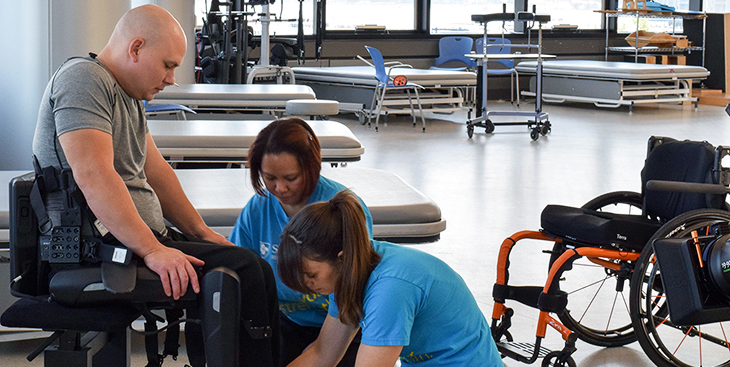
Meet Joe
Joe was left paralyzed after a motorcycle accident in 2016, but, with the help of Spaulding's inpatient, outpatient and ReWalk programs, Joe is finding his strength again and has big plans for the future.
View more Patient Stories.
-
Leading the way in Spinal Cord Injury Research
Research is about pushing boundaries and finding new pathways. Our ambitious research efforts include studies and clinical trials that have a direct impact on SCI recovery and the therapy you receive here at Spaulding.
The Spaulding New England Regional Spinal Cord Injury Center’s (SNERSCIC) mission is to promote quality of life for individuals with SCI throughout their lives, through exemplary standards of care and rehabilitation advanced through research, education, advocacy, and ongoing support.